Spec Comparison
Steel Toe vs Composite Toe Safety Shoes
Both pass the same 200-joule impact test — so the real decision is weight, metal detectors, temperature and price. Here's the honest breakdown for Malaysian workplaces, with models of each type you can order today.
The Short Answer
Same Certified Protection, Different Trade-offs
Under EN ISO 20345 and SIRIM MS ISO 20345 — the standards Malaysian sites actually check — a protective toe cap must survive a 200-joule impact (roughly a 20 kg weight dropped from 1 metre) and 15 kilonewtons of compression, regardless of what it's made of. A certified composite cap is not a "weaker" option; it passed the identical test as steel.
Steel remains the default on Malaysian sites for one reason: cost. A steel cap is thin, cheap to manufacture and extremely durable, which keeps SIRIM-certified steel-toe models affordable enough to equip whole crews — every brand we stock offers them. The trade-offs are weight, thermal conduction (steel gets hot in the sun and cold in freezers) and — critically for some sites — triggering metal detectors.
Composite caps (fibreglass, carbon composite or polymer) answer all three: lighter shoes, no thermal bridge, and — in fully metal-free builds with non-metallic midsoles — detector-friendly from cap to midsole. The cost is a price premium and a slightly bulkier toe profile, since composite needs more material thickness to pass the same test. Metal-free composite models are available in our catalogue — each product page states the toe cap and midsole material.
Side by Side
Steel vs Composite Comparison Table
| Steel Toe | Composite Toe | |
|---|---|---|
| Impact protection | 200 J certified | 200 J certified (same test) |
| Weight | Heavier | Noticeably lighter |
| Metal detectors | Triggers detectors | Passes (if fully metal-free build) |
| Heat / cold conduction | Conducts temperature | Insulating — better in freezers & sun |
| Toe profile | Thin cap, sleeker toe | Slightly bulkier toe box |
| Durability | Dents but rarely fails | Can crack under repeated extreme impact |
| Electrical conductivity | Conductive | Non-conductive |
| Price | Cheaper at same certification | Premium |
| Typical Malaysian use | Construction, factory, warehouse fleets | Airports, security zones, cold chain, electrical |
Pros & Cons
The Case for Each
Steel Toe
Pros
- ✓Lowest cost per certified pair — the bulk-order default
- ✓Thin cap keeps the toe profile sleek
- ✓Proven over decades; dents rather than fails
- ✓Widest choice across all four brands we stock
Cons
- ✕Heavier — fatigue adds up over long shifts
- ✕Triggers metal detectors
- ✕Conducts heat and cold
Composite Toe
Pros
- ✓Lighter — the comfort pick for 12-hour shifts
- ✓Metal-detector-safe in fully metal-free builds
- ✓No thermal bridge — better in freezers and tropical sun
- ✓Non-conductive — safer around electrical work
Cons
- ✕Price premium over steel at the same certification
- ✕Bulkier toe box
- ✕Fewer models available overall than steel
Shop the Comparison
Steel & Composite Models We Supply
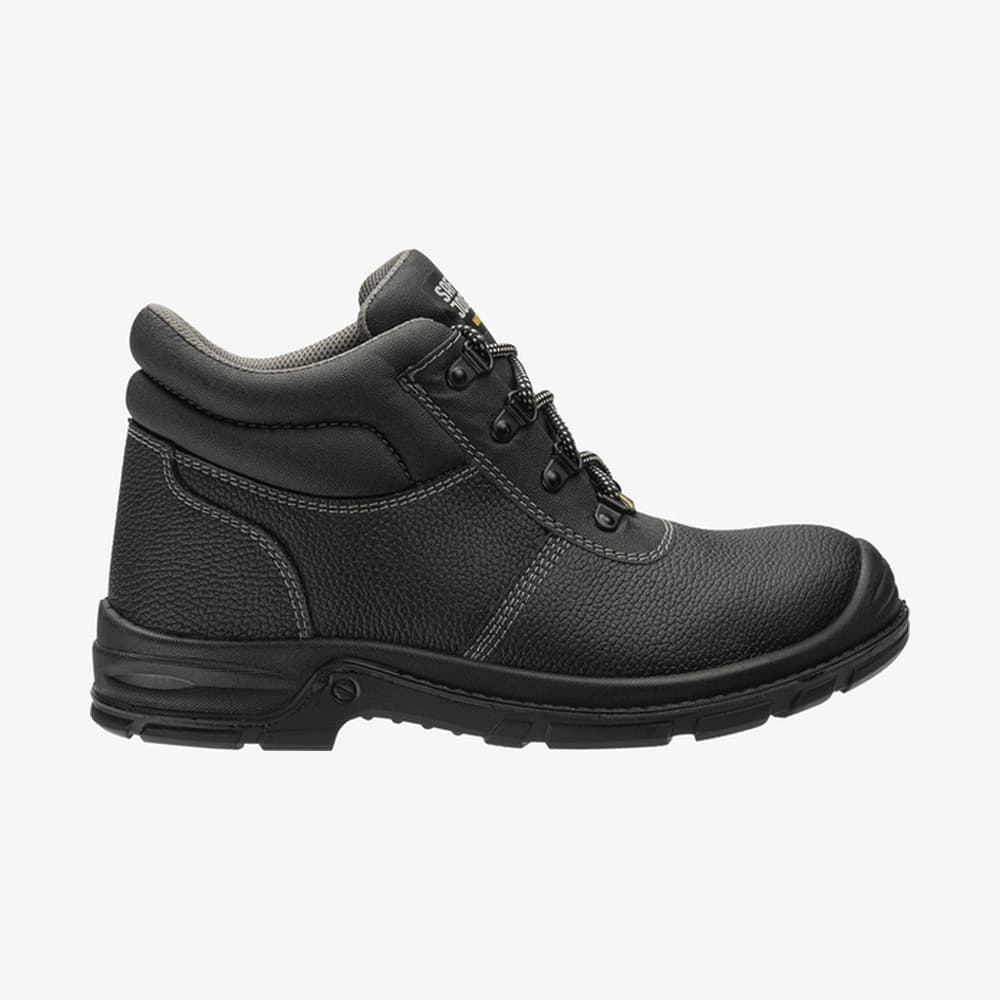
BestBoy 231
An S3-rated mid-cut safety boot in Barton action leather, with a steel toe cap, steel penetration-resistant midsole, water-resistant upper, cold insulation and an oil- & fuel-resistant outsole. The ankle-height cut adds support on uneven outdoor and construction ground.
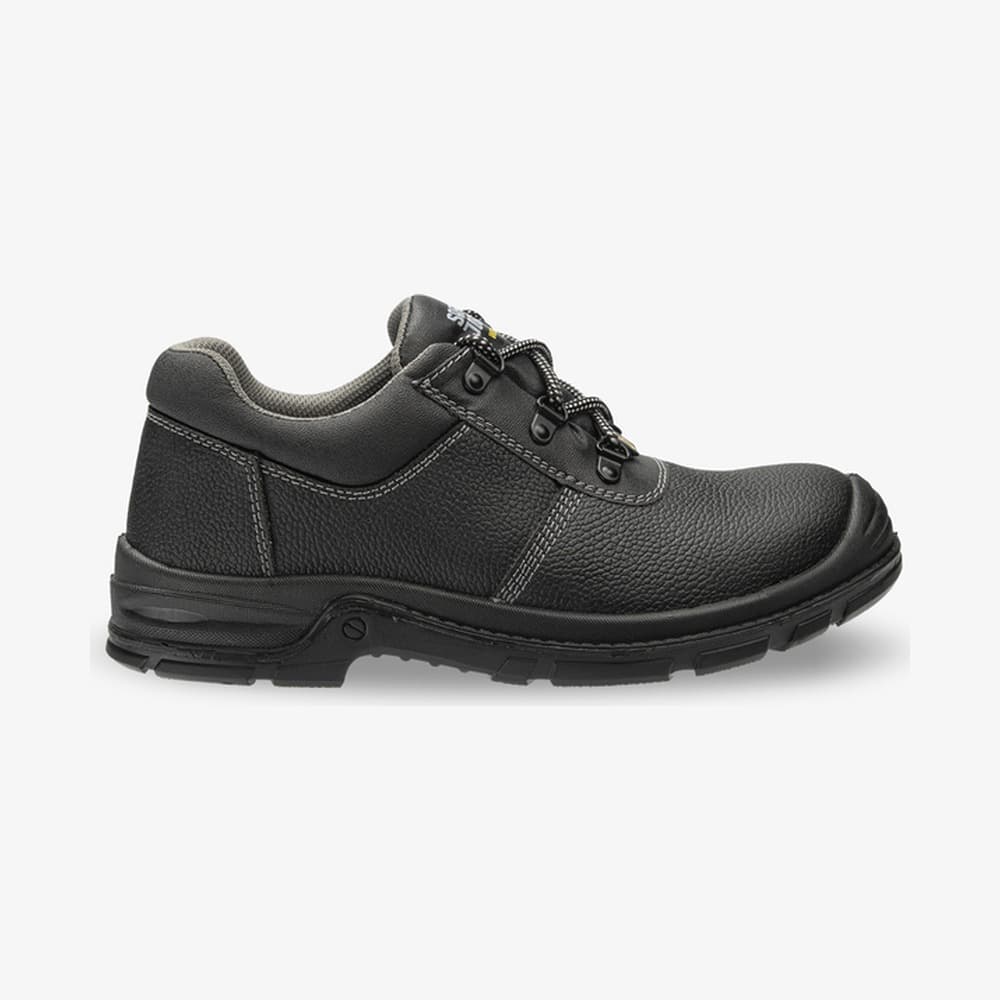
BestRun 231
An S3-rated low-cut safety shoe in Barton action leather, with a steel toe cap, steel penetration-resistant midsole, water-resistant upper, cold insulation and an oil- & fuel-resistant outsole. A lightweight, breathable everyday choice for general industry and logistics.
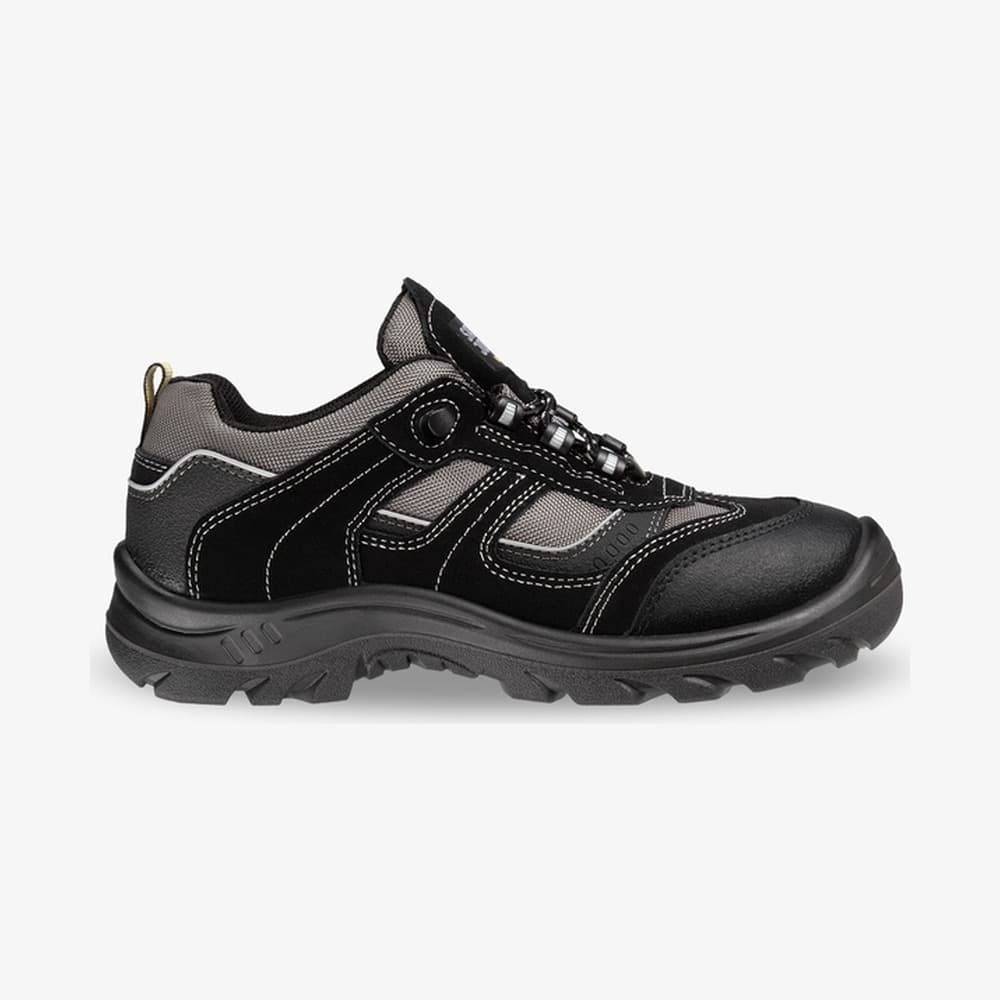
Jumper 31
An S3S (EN ISO 20345:2022) 100% metal-free safety shoe with a composite toe cap, non-metallic penetration-resistant midsole (PS, 3 mm nail), water-resistant suede upper and cold insulation. Its detector-friendly, non-conductive build suits sites where metal-free footwear is required.
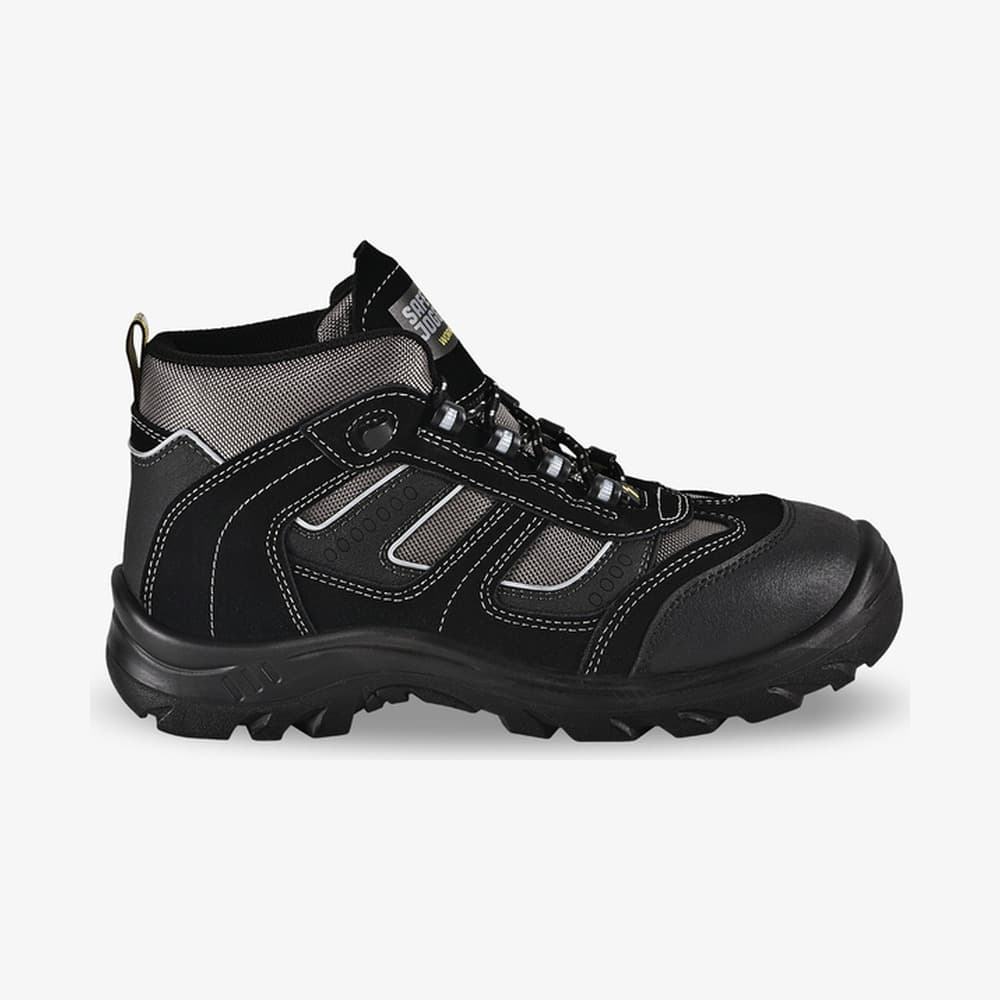
Climber 31
An S3S (2022 standard) safety shoe with metal-free composite toe cap, water-resistant upper, penetration-resistant midsole and cold insulation. Outdoor & heavy industrial sites.
Put any steel and composite model side by side in the comparison tool ›
FAQ
Steel vs Composite — FAQ
Is composite toe as strong as steel toe?
+
For certified footwear, yes at the standard level: both must pass the same EN ISO 20345 / SIRIM MS ISO 20345 200-joule impact and 15 kN compression tests. Steel deforms and can dent inward under extreme loads; composite absorbs and can crack instead. For everyday certified protection, both meet the identical benchmark.
Which is lighter, steel or composite toe?
+
Composite toe caps are meaningfully lighter than steel, which is why sport-style lightweight models are usually composite. Over a 12-hour shift the difference in fatigue is noticeable — check the published weight per shoe where available (Safety Jogger publishes weights on every model).
Do composite toe shoes pass metal detectors?
+
100% metal-free composite models pass metal detectors — but check the whole shoe, not just the toe: a composite toe with a steel midsole still triggers detectors. Models marked 'metal-free' (like Safety Jogger's Jumper and Climber lines) use textile penetration-resistant midsoles.
Are steel toe shoes a problem in heat or cold?
+
Steel conducts temperature, so in cold rooms or under direct tropical sun a steel cap transfers heat/cold faster than composite. For most Malaysian indoor work this is a comfort issue rather than a safety one; for cold-chain and freezer work, composite with cold insulation (CI) is the better spec.
Which is cheaper, steel toe or composite toe safety shoes?
+
Steel toe models are consistently cheaper at the same certification level, which is why most SIRIM-certified safety shoes sold in Malaysia use steel caps. Composite carries a premium; you pay it for weight savings, detector compliance or thermal comfort, not for more protection.
Compare, Then Buy
Still torn between steel and composite?
Compare specs side by side with our free tool, or WhatsApp us directly — tell us your industry, risk level, team size and size range, and we reply with a recommendation and quote.