Safety Class Comparison
S1 vs S3 Safety Shoes: Which Class Does Your Site Need?
The two most commonly specified safety classes in Malaysia, compared line by line — what each certifies under EN ISO 20345, what it costs you in weight and money, and how to match the class to the actual ground your team works on.
The Logic of the Classes
One Ladder, Two Questions
EN ISO 20345 classes stack features in a ladder: S1 gives you the certified toe cap, anti-static soles, an energy-absorbing heel and oil-resistant outsole. S1P adds a penetration-resistant midsole against nails and debris underfoot. S3 then adds a water-resistant upper and a cleated outsole that grips soft or muddy ground. (SIRIM MS ISO 20345 — the Malaysian certification — mirrors the same structure.)
So choosing between S1/S1P and S3 comes down to two questions about the ground, not the job title. Is there puncture risk underfoot? Nails, offcuts, wire and debris mean you need the P — S1P minimum. Is the ground wet or unpaved?Rain-exposed sites, wet concrete, mud and drainage work mean S3's water-resistant upper and cleated sole stop being nice-to-have and become the spec.
Answer "no" to both and S1 keeps your team in lighter, cooler, cheaper footwear — a real benefit over a Malaysian shift in a non-air-conditioned plant. Answer "yes" to both and S3 is the honest requirement; buying S1 to save money just moves the cost to the first rainy month.
Feature by Feature
S1 vs S1P vs S3 Comparison Table
| S1 | S1P | S3 | |
|---|---|---|---|
| Toe cap (200 J) | ✓ | ✓ | ✓ |
| Anti-static + energy heel | ✓ | ✓ | ✓ |
| Oil-resistant outsole | ✓ | ✓ | ✓ |
| Penetration-resistant midsole | — | ✓ | ✓ |
| Water-resistant upper | — | — | ✓ |
| Cleated outsole | — | — | ✓ |
| Relative weight | Lightest | Light | Heavier |
| Relative price | $ | $$ | $$$ |
| Right environment | Dry indoor, no debris | Indoor with puncture risk | Outdoor, wet, unpaved |
Trade-offs
S1/S1P vs S3: The Case for Each
S1 / S1P — the indoor choice
Pros
- ✓Lighter and cooler over long shifts
- ✓Cheaper per pair at the same certification quality
- ✓Sport-style comfortable designs widely available
- ✓S1P covers puncture risk without S3's bulk
Cons
- ✕No water resistance — wet floors soak through
- ✕Smooth-profile soles grip less on soft ground
- ✕Wrong spec if the site officer requires S3
S3 — the outdoor standard
Pros
- ✓Full package: toe, midsole, water resistance, cleated grip
- ✓One spec covers rain, mud and debris — fewer surprises
- ✓Usually accepted anywhere a lower class is specified
- ✓Mid/high-cut S3 boots add ankle support on rough ground
Cons
- ✕Heavier and warmer — overkill for dry indoor work
- ✕Costs more per pair
- ✕Water-resistant ≠ waterproof — standing water needs rubber boots
Shop the Comparison
S1P & S3 Models We Supply
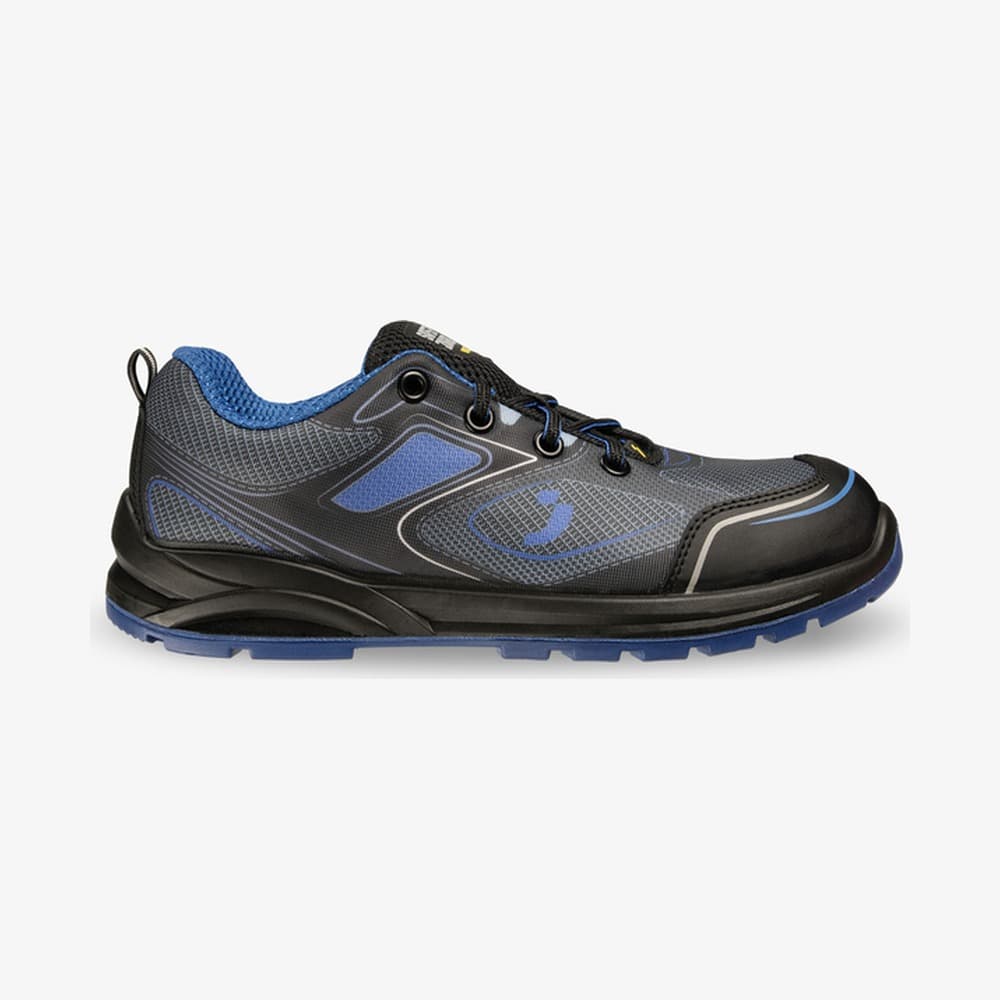
Cador — Blue
An S1P-rated safety shoe with steel toe cap, penetration-resistant midsole and ESD protection. General industry & long shifts on foot.
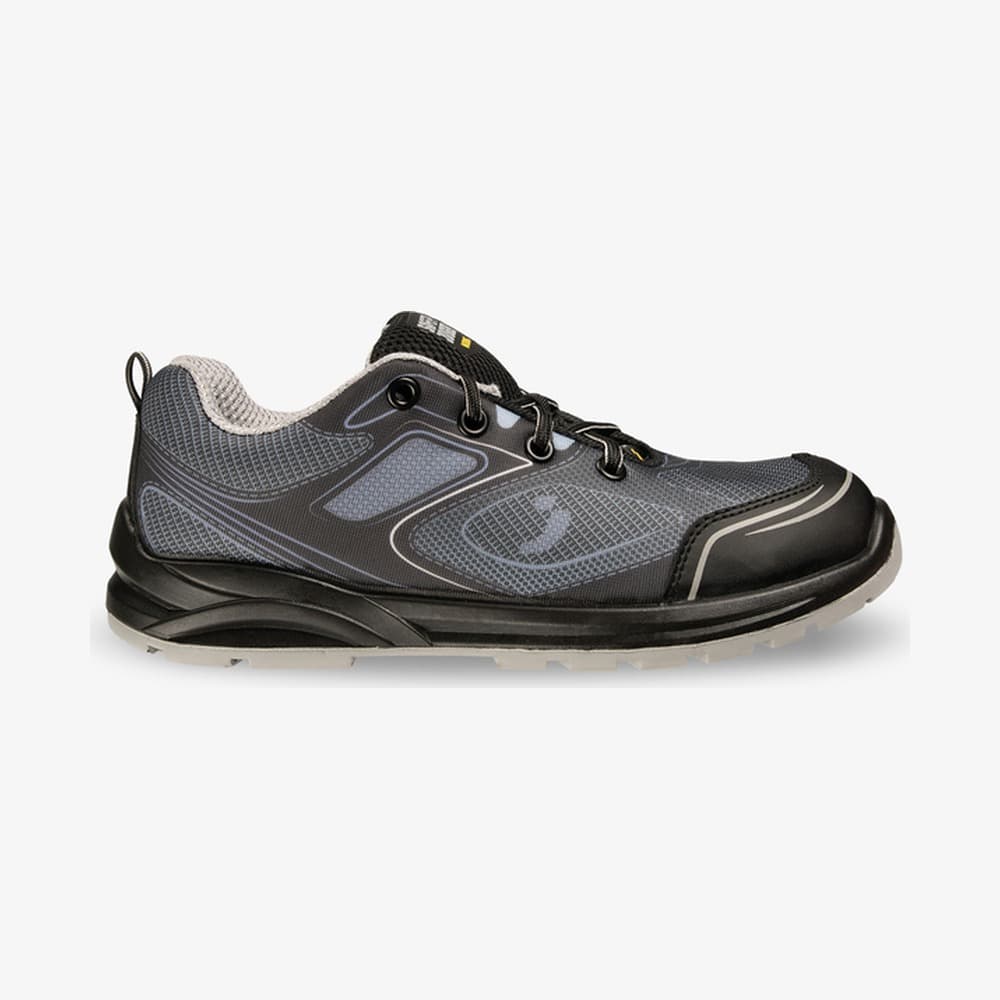
Cador — Light Grey
An S1P-rated safety shoe with steel toe cap, penetration-resistant midsole and ESD protection. General industry & long shifts on foot.
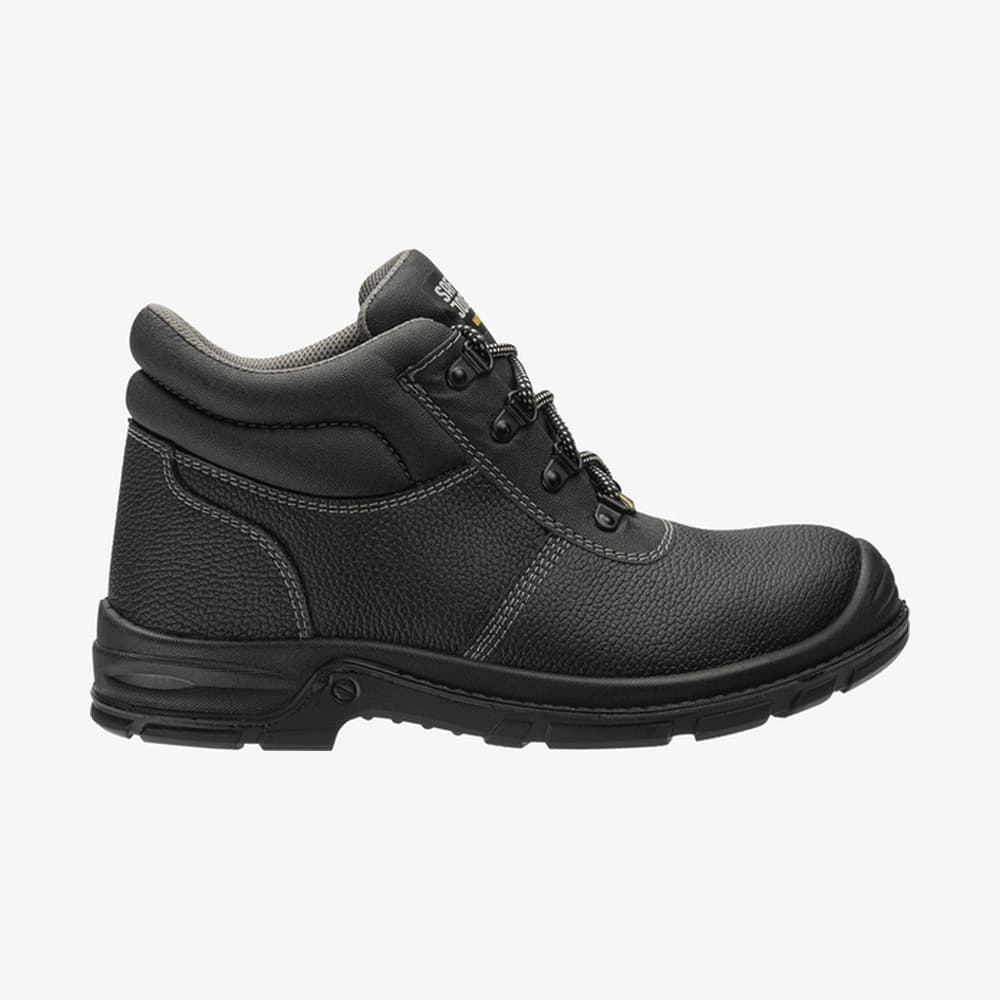
BestBoy 231
An S3-rated mid-cut safety boot in Barton action leather, with a steel toe cap, steel penetration-resistant midsole, water-resistant upper, cold insulation and an oil- & fuel-resistant outsole. The ankle-height cut adds support on uneven outdoor and construction ground.
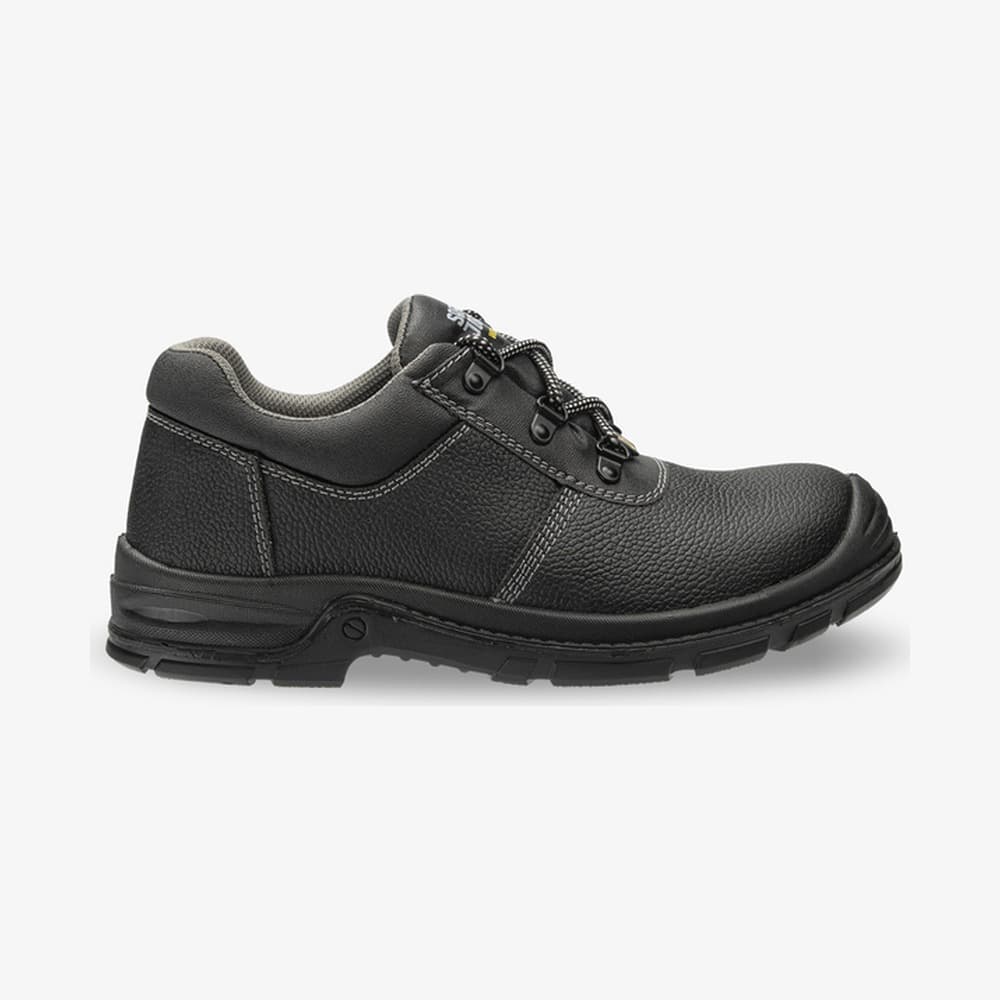
BestRun 231
An S3-rated low-cut safety shoe in Barton action leather, with a steel toe cap, steel penetration-resistant midsole, water-resistant upper, cold insulation and an oil- & fuel-resistant outsole. A lightweight, breathable everyday choice for general industry and logistics.
Compare any S1P and S3 model side by side in the free tool ›
FAQ
S1 vs S3 — FAQ
What does S1 mean on safety shoes?
+
S1 under EN ISO 20345 means: protective toe cap (200 J), closed energy-absorbing heel, anti-static properties and oil-resistant outsole. It does not include midsole penetration protection or water resistance. S1P adds the penetration-resistant midsole.
What does S3 mean on safety shoes?
+
S3 includes everything in S1P — toe cap, anti-static, energy-absorbing heel, penetration-resistant midsole — plus a water-resistant upper and a cleated (lugged) outsole for grip on soft ground. It's the standard class for outdoor construction and heavy industry.
Is S3 always better than S1?
+
It's more protective, not automatically better. S3 shoes are heavier, warmer and cost more. For dry indoor work — assembly lines, warehouses, workshops — S1/S1P delivers the required protection with less fatigue. Specify S3 when water, mud or outdoor terrain are actually present.
Do Malaysian sites require S3 safety shoes?
+
Requirements are set per site by the safety officer under JKKP/DOSH oversight, not by a single national rule. Many Malaysian construction sites accept SIRIM-certified SBP class; wet or outdoor-heavy scopes often specify S3. Always confirm the class in writing before a bulk order — we can help interpret the requirement.
What is the difference between S1P and S3?
+
Both have toe cap plus penetration-resistant midsole. S3 adds water resistance and a cleated outsole. If the ground is dry, S1P is the lighter, cheaper choice; if the ground is wet or unpaved, S3 earns its premium.
Compare, Then Buy
Not sure which class your site requires?
Compare specs side by side with our free tool, or WhatsApp us directly — tell us your industry, risk level, team size and size range, and we reply with a recommendation and quote.